How a three-day experiential learning expedition to Queen Elizabeth National Park helped practising tourism professionals deepen their product knowledge, sharpen their skills and rediscover the destinations they sell.
By Derick Remember
CEO & Founder, Ronick Tours and Travel | Board Member, Tour Operators Academy
Every day, tour operators across Uganda design itineraries, recommend destinations, negotiate accommodation arrangements and convince travellers that Uganda offers some of Africa’s most extraordinary tourism experiences. They sell the beauty of Queen Elizabeth National Park, the excitement of wildlife encounters, the tranquillity of wilderness lodges and the adventure of exploring Uganda’s remarkable landscapes.
But how deeply does a tour operator understand the experience behind the product being sold? For professionals already working in the tourism industry, product knowledge is not simply about knowing where an attraction is located or what activities are available. It involves understanding how the experience unfolds, what makes it special, the practical considerations involved in delivering it and the expectations of the traveller who has paid to enjoy it.
It was against this background that the Tour Operators Academy organised a three-day product knowledge familiarisation tour to Queen Elizabeth National Park and selected tourism establishments across western Uganda. The participants were not newcomers being introduced to the tourism business. They were practising tour operators, already engaged in selling destinations, designing safari packages and serving clients. The journey aimed to deepen their understanding of the products they handle daily.
The concept was simple but powerful: take professional learning beyond the conventional classroom and place it directly within the tourism environment. For three days, the tour became a moving classroom. The highways became lessons in route planning and safari costing. The wilderness lodges became practical demonstrations of hospitality. The savannah became a lecture hall for destination interpretation. The boat cruise became a lesson in tourism product positioning. And the campfire became a forum for professional exchange. The participants were not merely visiting attractions. They were learning through the experiences they already sell.
A Classroom on Wheels
The educational experience began with the departure from Kampala, following the western tourism circuit through Mityana, Mubende, Fort Portal and Kasese towards Queen Elizabeth National Park. Ordinarily, such a journey would be viewed as a transfer between destinations. On this occasion, however, the road itself became part of the learning environment.
As the bus moved through the changing landscapes of western Uganda, participants engaged in practical discussions on safari planning, costing, itinerary development and the operational realities of running a tour business. The conversations were directly relevant to their existing businesses. How accurately should an operator calculate the cost of a safari? How do fuel consumption, driving distances, stopovers and accommodation choices affect profitability? What considerations determine whether a particular route is commercially practical and attractive to a client?
Instead of discussing hypothetical journeys, the operators were travelling the routes under examination. Distances were experienced, travel times were appreciated and operational decisions could be discussed in the context of an actual tour. The sessions also explored client management, professional communication and the importance of delivering services that meet or exceed customer expectations.
These were familiar business challenges, but the opportunity to discuss them while experiencing the practical realities of a safari gave the lessons a different meaning. It was classroom teaching brought onto the road, where theory could immediately be tested against experience.
Acacia Wilderness Lodge: Experiencing Hospitality Through the Eyes of a Client
Accommodation is one of the most important components of a safari package. Tour operators regularly recommend lodges and hotels to their clients, often basing their decisions on property descriptions, photographs, rates, location and previous customer feedback. However, spending time at a property provides a level of understanding that cannot be fully captured in a brochure.
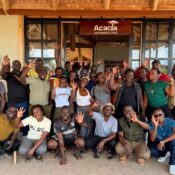
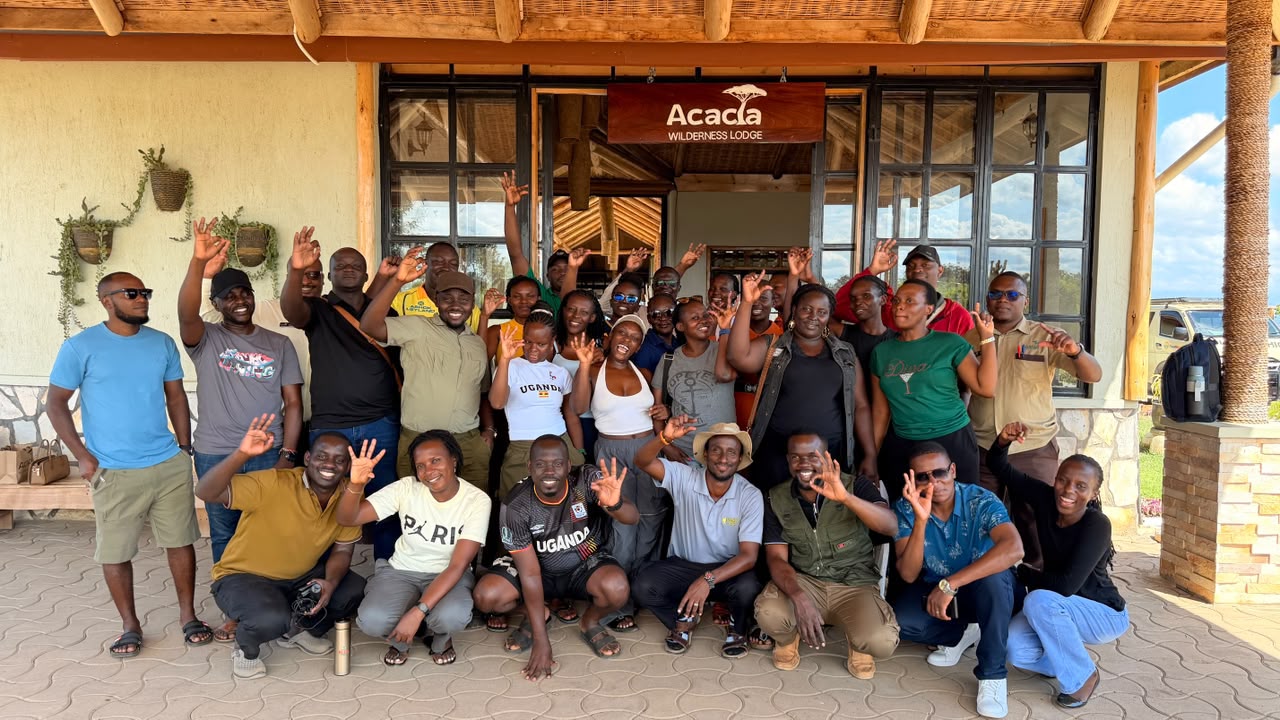
During the familiarisation tour, participants spent two nights at Acacia Wilderness Lodge, experiencing firsthand the hospitality and wilderness atmosphere associated with the Queen Elizabeth National Park tourism circuit. For the operators, the stay was more than accommodation. It was an opportunity to examine a tourism product from the perspective of the guests they serve.
Attention was given to the quality of hospitality, cleanliness, ambience, guest comfort, service delivery and the overall experience offered by the lodge. The participants could appreciate how the physical environment, staff interactions and attention to detail contribute to the value of an accommodation product. Such knowledge is particularly important when recommending facilities to different categories of travellers, whose expectations, budgets and preferences may vary considerably.
The stay also demonstrated that hospitality is not merely about providing a bed and meals. It is about creating an experience that becomes part of the traveller’s memory. Special appreciation goes to Mr. James Obita and the entire Acacia Wilderness Lodge team for the warm reception, professionalism and exceptional hospitality extended to the participants. Their service provided a practical example of the standards that tour operators should understand and consider when selecting accommodation partners for their clients.
When the Savannah Became a Lecture Hall
One of the most memorable educational sessions took place during a game drive in Queen Elizabeth National Park. For practising tour operators, a game drive is a familiar tourism product. It features prominently in safari itineraries and is among the experiences most frequently recommended to visitors exploring Uganda. Yet there is a significant difference between including a game drive in an itinerary and personally appreciating the dynamics of the experience.
As the participants travelled through the park’s savannah landscape, Denis Agaba, Chief Executive Officer of Agasaro Safaris, facilitated an interactive professional learning session. The environment offered an unusual but highly effective classroom. Rather than discussing wildlife tourism from a meeting room, participants were surrounded by the very landscapes and attractions under discussion. The game drive provided an opportunity to reflect on destination interpretation, visitor expectations, safari organisation and the importance of communicating the value of wildlife experiences. It also reinforced the role of conservation knowledge in responsible tourism marketing.
For an operator, the ability to describe an experience accurately is essential. Clients want more than a list of animals they might see. They want to understand what makes a destination distinctive, what to expect during the activity and why the experience is worth including in their itinerary. By participating in the game drive themselves, the operators were able to strengthen the practical knowledge that informs their recommendations. The savannah had become a lecture hall, and the safari itself was the teaching material.
The Kazinga Channel: Understanding the Product Beyond Its Description
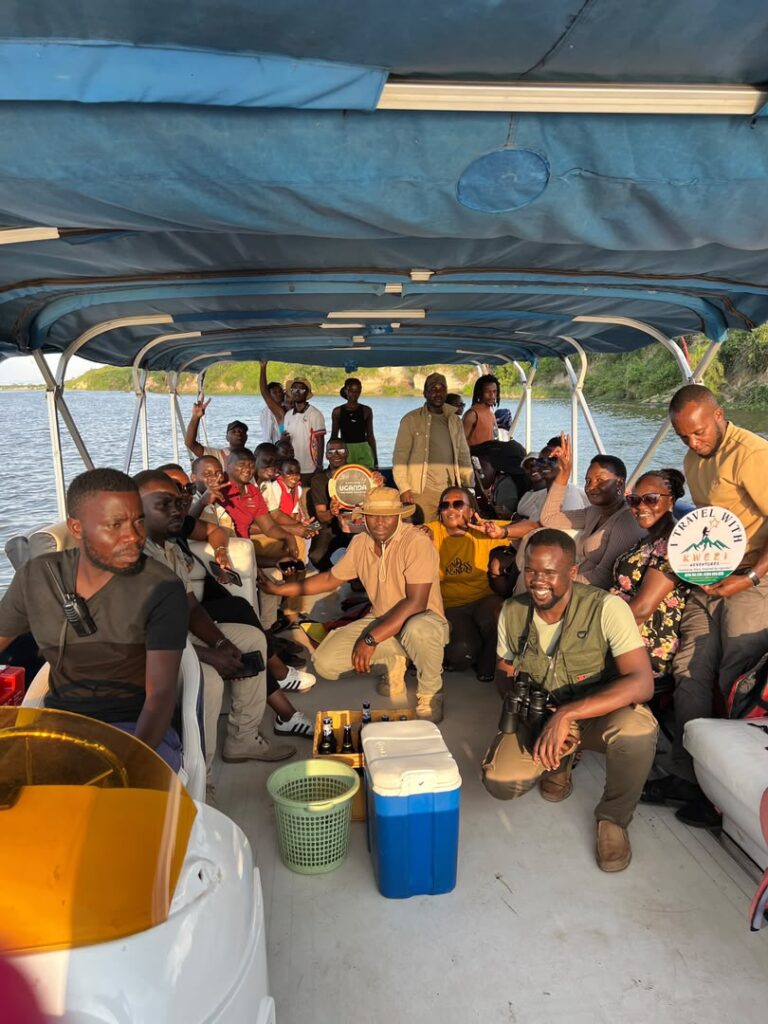
The educational journey continued with a boat cruise along the Kazinga Channel, one of Queen Elizabeth National Park’s most celebrated attractions. The channel, renowned for its hippos, birdlife and wildlife along the shoreline, is a familiar feature of many Uganda safari packages. For the participating operators, however, the cruise was an opportunity to examine the attraction as a tourism product rather than simply enjoy it as visitors.
Experiencing the cruise firsthand allowed them to appreciate its atmosphere, its relationship with other park activities and the value it adds to a visitor’s overall safari experience. The activity also stimulated practical considerations relevant to tour packaging. How should the boat cruise be positioned within an itinerary? How can it complement a game drive? What information should be communicated to clients before the activity? How should an operator explain the experience to a traveller deciding between different safari options?
These questions are central to effective product marketing. A tour operator who has personally undertaken an activity is better positioned to explain its distinctive qualities, answer questions and recommend it to the appropriate client. The Kazinga Channel experience demonstrated that professional product knowledge grows stronger when information is supported by personal observation and participation.
The Campfire Classroom: Professionals Learning from Professionals
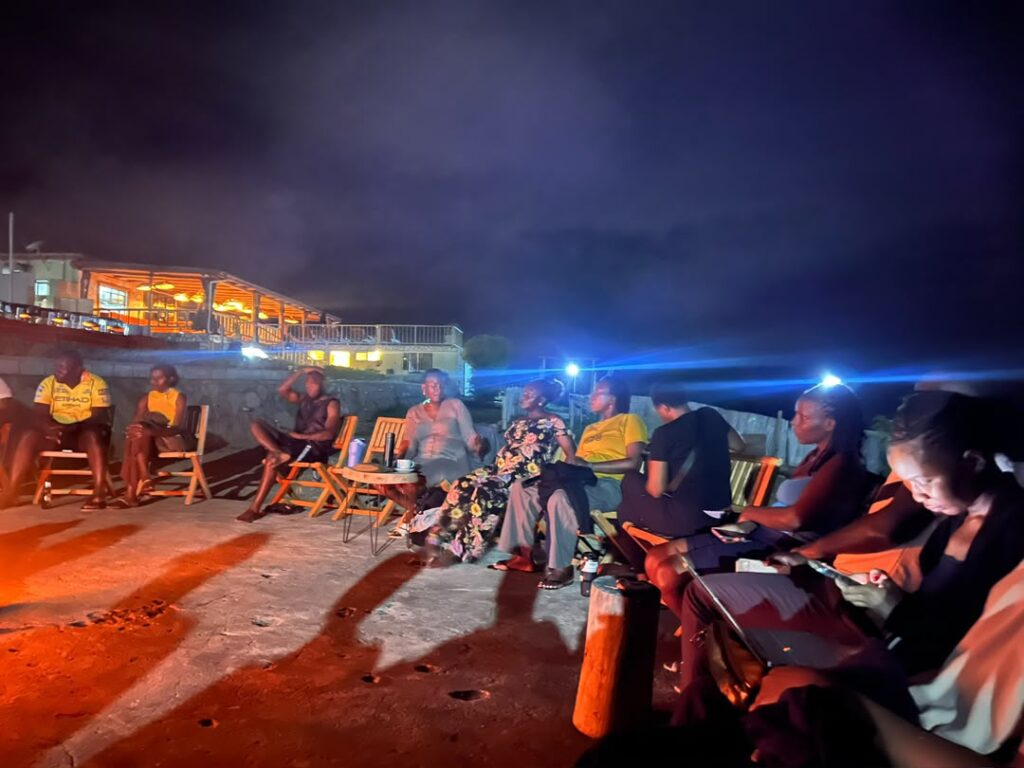
As evening settled over the wilderness, the educational programme continued in a less conventional setting. Around the campfire, Daniel Kiiza, Chief Executive Officer of Kwezi Adventures, facilitated an interactive session that brought together professional experience, practical business knowledge and open discussion. The atmosphere was informal, but the learning remained purposeful.
Participants shared experiences from their businesses, discussed challenges encountered in the tourism trade and explored approaches to improving service delivery and business performance. Unlike a conventional classroom where knowledge often flows from lecturer to learner, the campfire session encouraged professional exchange among operators who brought their own experiences and perspectives. This peer-to-peer learning was an important dimension of the familiarisation tour. Tour operators may compete for clients, but they also operate within an interconnected industry where cooperation, professional relationships and shared knowledge can contribute to better service standards.
The session demonstrated that continuous professional development does not always require formal conference halls or structured lectures. Sometimes, meaningful learning takes place through honest conversations between professionals who understand the realities of the same industry. Under the evening sky, the campfire became another classroom.
Jobi Wild Adventures: Learning Adventure Tourism by Living It
At Jobi Wild Adventures, the educational tour introduced participants to a different dimension of Uganda’s tourism offering. The programme included a scenic valley walk and an exhilarating zip-lining experience, giving the operators an opportunity to participate directly in activities that can be incorporated into adventure tourism packages. For professionals accustomed to selling experiences, participating in the activities offered valuable firsthand insight. Adventure tourism is particularly dependent on the emotions and sensations associated with an activity. Excitement, anticipation, confidence, fear and achievement all influence how visitors perceive the experience.
Such qualities can be difficult to communicate convincingly through promotional material alone. By undertaking the valley walk and zip-lining activities themselves, the operators gained a more personal appreciation of what adventure tourists encounter. The experience also highlighted opportunities for diversifying safari itineraries beyond traditional wildlife viewing.
Uganda’s tourism offering includes adventure, culture, nature walks, hospitality and other experiences that can complement established safari products. For tour operators seeking to develop attractive and competitive packages, understanding these complementary activities is commercially valuable. The lesson was clear: selling an adventure becomes more meaningful when the person recommending it understands the experience from participation rather than description alone.
The Return Journey: Discovering More Products Along the Tourism Circuit
The educational value of the familiarisation tour did not end with the departure from Queen Elizabeth National Park. Instead of returning to Kampala through Fort Portal, the group followed an alternative route through Mbarara and Masaka. This provided another opportunity to appreciate the different tourism circuits available to operators designing travel packages across western Uganda. The return journey included a site inspection at Acacia Country Inn in Mbarara, where participants were introduced to another accommodation property within the Acacia Hotels portfolio.
Site inspections are an important professional practice in the tourism trade. They enable operators to assess facilities, understand the services available and determine how particular properties may fit into the travel packages they offer. The visit therefore provided an opportunity to expand participants’ accommodation product knowledge and strengthen their ability to make informed recommendations to clients.
Another important stop was Igongo Cultural Centre, where the group explored the potential of cultural attractions and hospitality establishments located along major tourism routes. The visit highlighted an aspect of itinerary development that can sometimes be overlooked: the journey between major destinations is itself an opportunity to enrich the visitor’s experience.
A stop along the highway can be more than a meal break or a moment of rest. Properly incorporated into an itinerary, it can introduce travellers to local heritage, cultural interpretation and other experiences that add value to the overall journey. For the participating operators, the alternative return route demonstrated how firsthand exploration can reveal opportunities to improve existing safari packages and develop new combinations of tourism products.
Why Experiential Learning Matters for Established Tour Operators
The familiarisation tour illustrated an important principle in tourism professional development: experience is not a substitute for knowledge, but it is one of the most effective ways of deepening it. The participants already understood the fundamentals of operating tourism businesses. They were familiar with itineraries, destinations, client relations and the commercial considerations involved in selling travel experiences. What the Tour Operators Academy provided was an opportunity to revisit these familiar subjects in an environment where the products themselves became part of the learning process.
The approach combined structured teaching, professional mentorship, site inspections, practical demonstrations, peer learning and direct participation in tourism activities. This made the journey both educational and experiential. It also addressed a challenge within the tourism industry. A professional may have sold a destination repeatedly without having experienced every component of the package personally. As tourism products evolve, accommodation facilities improve and new attractions emerge, operators need opportunities to update and broaden their knowledge.
Familiarisation tours provide one practical response to this need. They allow operators to assess products more critically, identify opportunities for improved packaging, strengthen relationships with service providers and develop greater confidence in the recommendations they make to clients. For established businesses, this is not introductory training. It is continuing professional development, aimed at improving the quality and competitiveness of services already being delivered.
Building a Culture of Continuous Professional Learning
The three-day expedition also reflected the broader vision of the Tour Operators Academy: to create a platform through which tourism professionals can continuously learn, share knowledge and strengthen the industry. Special recognition goes to Julius Oboth, the Vision Bearer of the Tour Operators Academy, whose commitment to practical and collaborative professional education has helped shape this approach to industry learning.
The Academy’s model recognises that tourism is a dynamic sector. Destinations evolve, hospitality products change, customer expectations shift and new experiences continually enter the market. Consequently, even operators with years of experience have much to gain from structured opportunities to revisit destinations, inspect facilities and engage with fellow professionals. The Queen Elizabeth National Park familiarisation tour brought this philosophy to life. It brought together operators who were already active in the trade and created an environment in which they could learn from trainers, service providers, the destinations themselves and one another.
As Trip Leader, I found the experience particularly rewarding because the participants approached the journey not simply as travellers, but as professionals eager to deepen their understanding of the products they represent. Their questions, discussions and participation reflected a shared recognition that effective tourism marketing must be supported by genuine product knowledge.
Beyond the Classroom, Back to Business
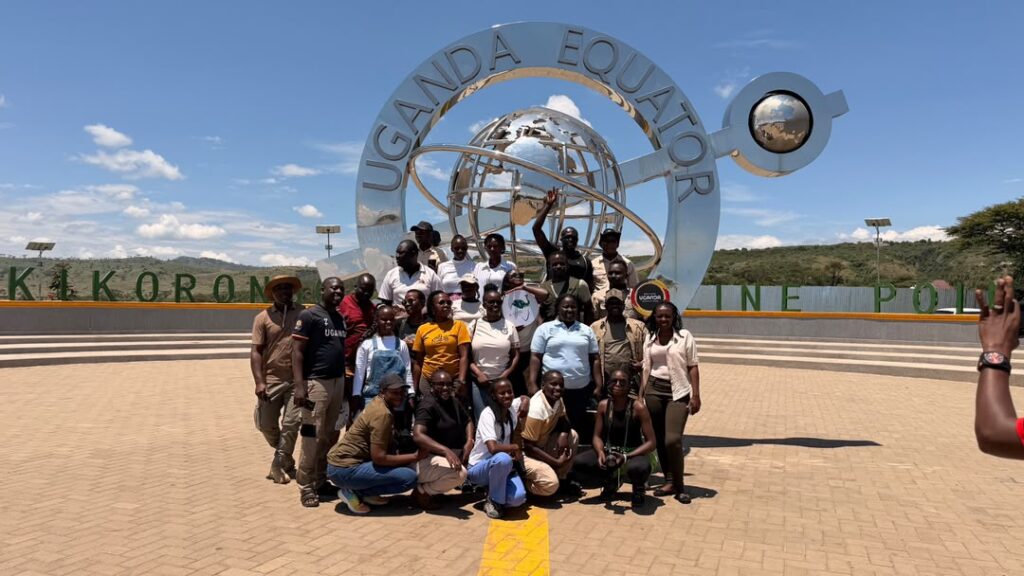
After three days of travelling, learning and experiencing Uganda’s tourism products firsthand, the operators returned to Kampala with more than memories of an enjoyable safari. They had travelled two different western tourism routes, experienced accommodation facilities, participated in wildlife and adventure activities, explored cultural attractions and engaged in professional discussions about the business of tourism. Most importantly, they had encountered the products they sell in a setting that allowed them to connect established professional knowledge with lived experience.
This is what made the journey distinctive. It was not simply a tour of Queen Elizabeth National Park. It was not a recreational excursion disguised as training. Nor was it an introductory programme for people unfamiliar with tourism. It was a purposeful educational expedition for practising tour operators, designed to strengthen professional competence through direct engagement with tourism products. The approach demonstrated that learning does not end when a professional enters the industry. Indeed, the responsibility to keep learning becomes even more important when clients depend on that professional’s knowledge, judgement and recommendations.
A brochure can describe a destination. A photograph can capture its beauty. A well-designed itinerary can outline the journey. But firsthand experience gives the operator something more: the ability to understand the product beyond its written description and to communicate that understanding with confidence. For the Tour Operators Academy, this is the essence of experiential professional education.
The best way to understand the experience you sell is to experience it yourself.
About the Tour Operators Academy
The Tour Operators Academy provides opportunities for practising and emerging tourism professionals to strengthen their industry knowledge through experiential learning, mentorship, product familiarisation and professional collaboration.
For inquiries and Academy enrolment:
Telephone: +256 774 935 007
Website: www.thetouracademy.africa